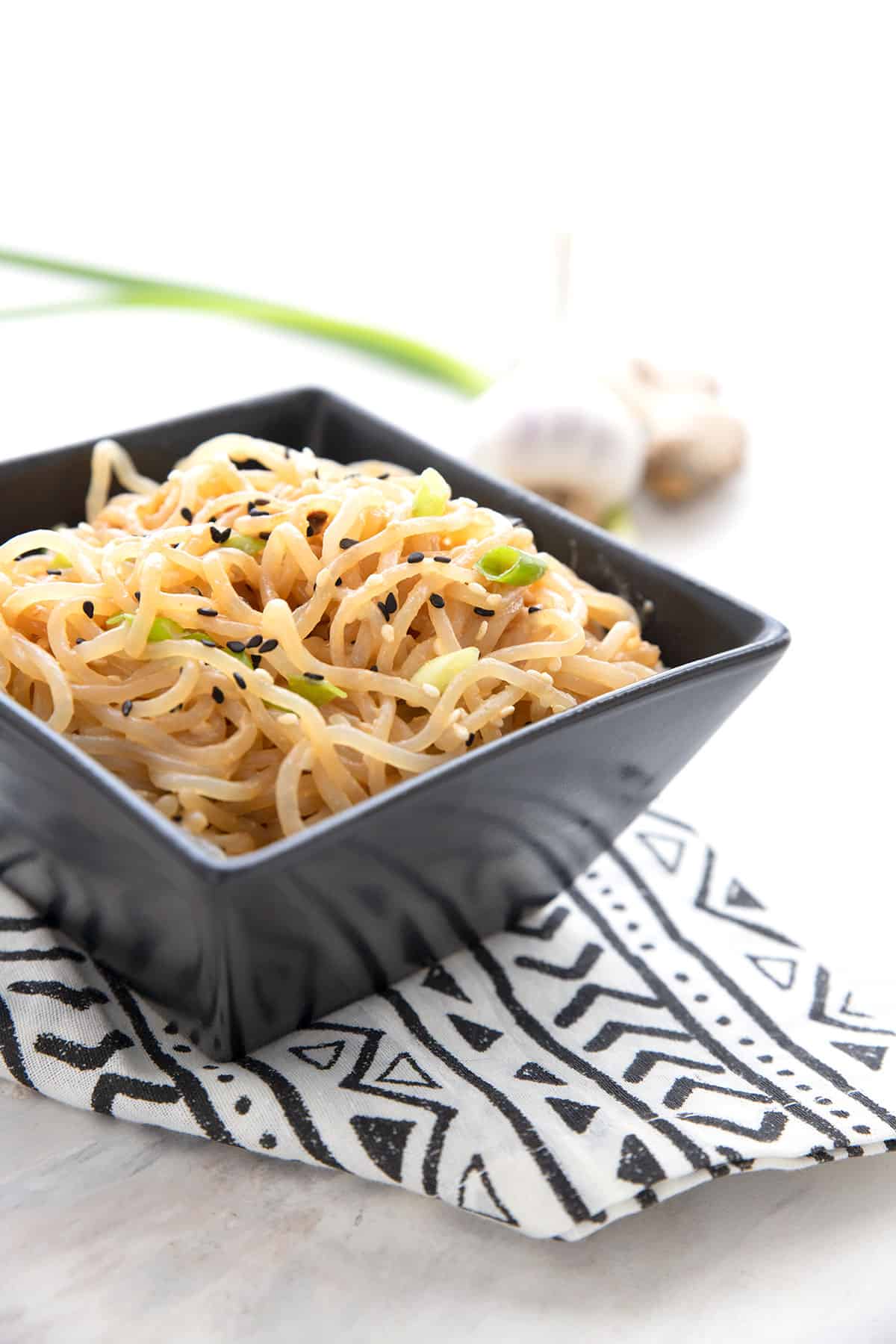
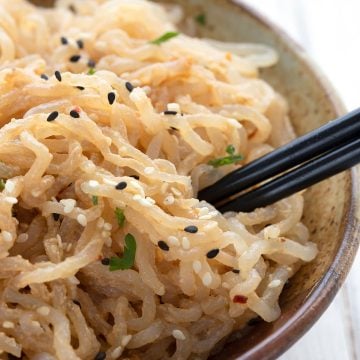
Keto Sesame Noodles is an easy side dish that can be served hot or cold. Tossed with a rich and flavorful sauce, these pan-fried noodles are on the table in less than 15 minutes!
Got a few minutes?
Then do yourself a big favor and make these Keto Sesame Noodles. Because they are easy, delicious, and work as a side dish with just about anything. You won’t regret it!
I have always loved Asian sesame noodles, and I found myself craving them a few months ago. So I tossed together the sauce ingredients and pan-fried some shirataki noodles. It came together so well that it instantly became one of our favorite keto side dishes.
It’s such a fast and simple dish, but the flavor is outstanding. And because they can be served hot or cold, they are wonderful any time of year. They will take your keto meals from good to fabulous.
What are shirataki noodles?
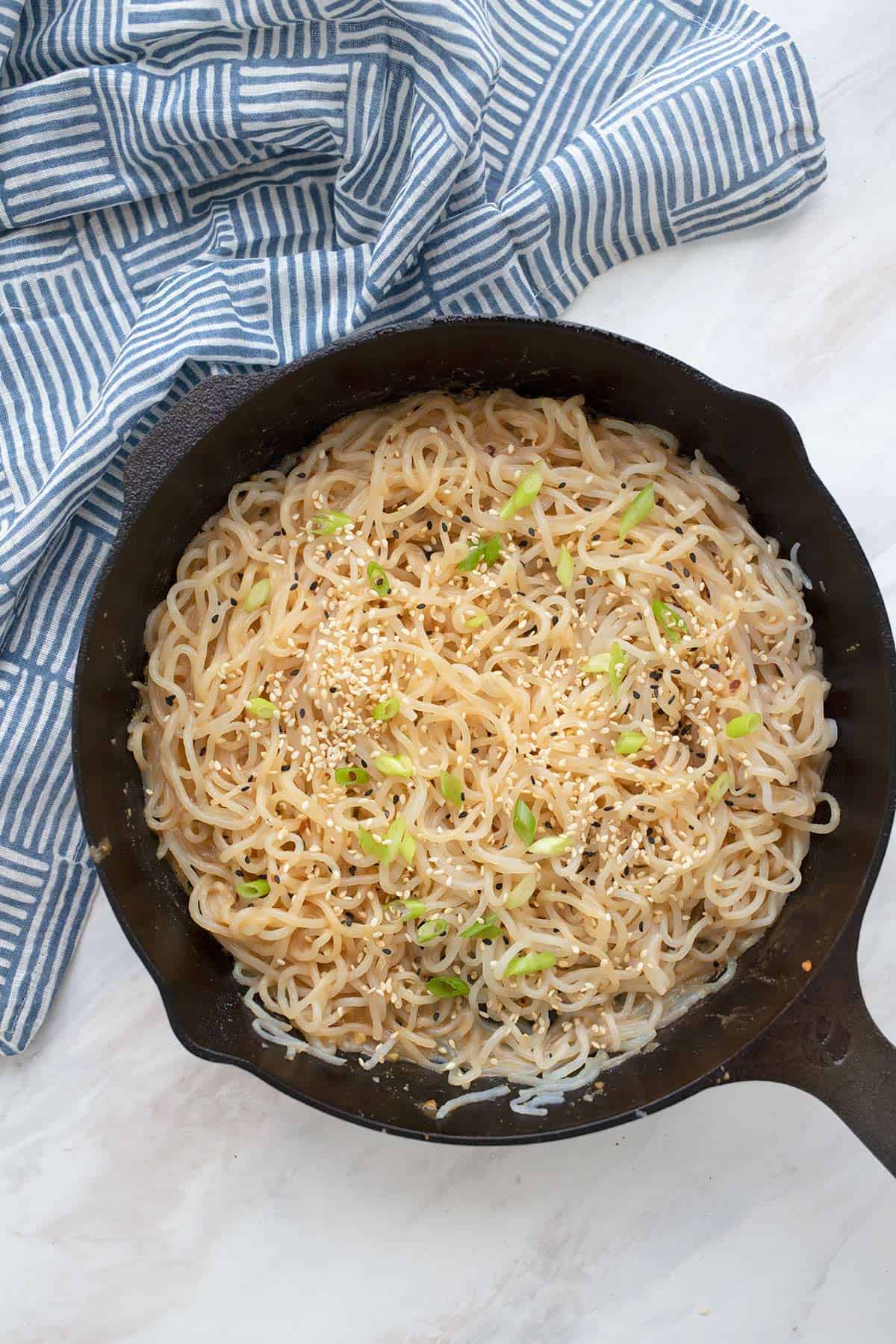
Before we get started, perhaps we should discuss these low carb, high fiber noodles as they get a bit of a bad rap at times.
Shirataki noodles are made from the konjac root (or yam), and are mostly translucent, with a slightly gelatinous texture. They usually come packaged in liquid that needs to be drained off.
Some people object to shirataki because of the smell and the slightly rubbery texture. But it all comes down to how you cook and serve them. With the right approach, they can be absolutely delicious. I recommend rinsing them well and then sautéing them in a pan for 3 to 5 minutes. They have much better flavor and texture when cooked in this way.
And they are incredibly healthy, too. Konjac root is the same ingredient found in glucomannan, a popular keto thickening agent. It’s a soluble prebiotic fiber that is known to improve gut health and possibly even lower blood glucose. So it’s worth getting familiar with shirataki noodles as a keto pasta replacement!
Ingredients you need
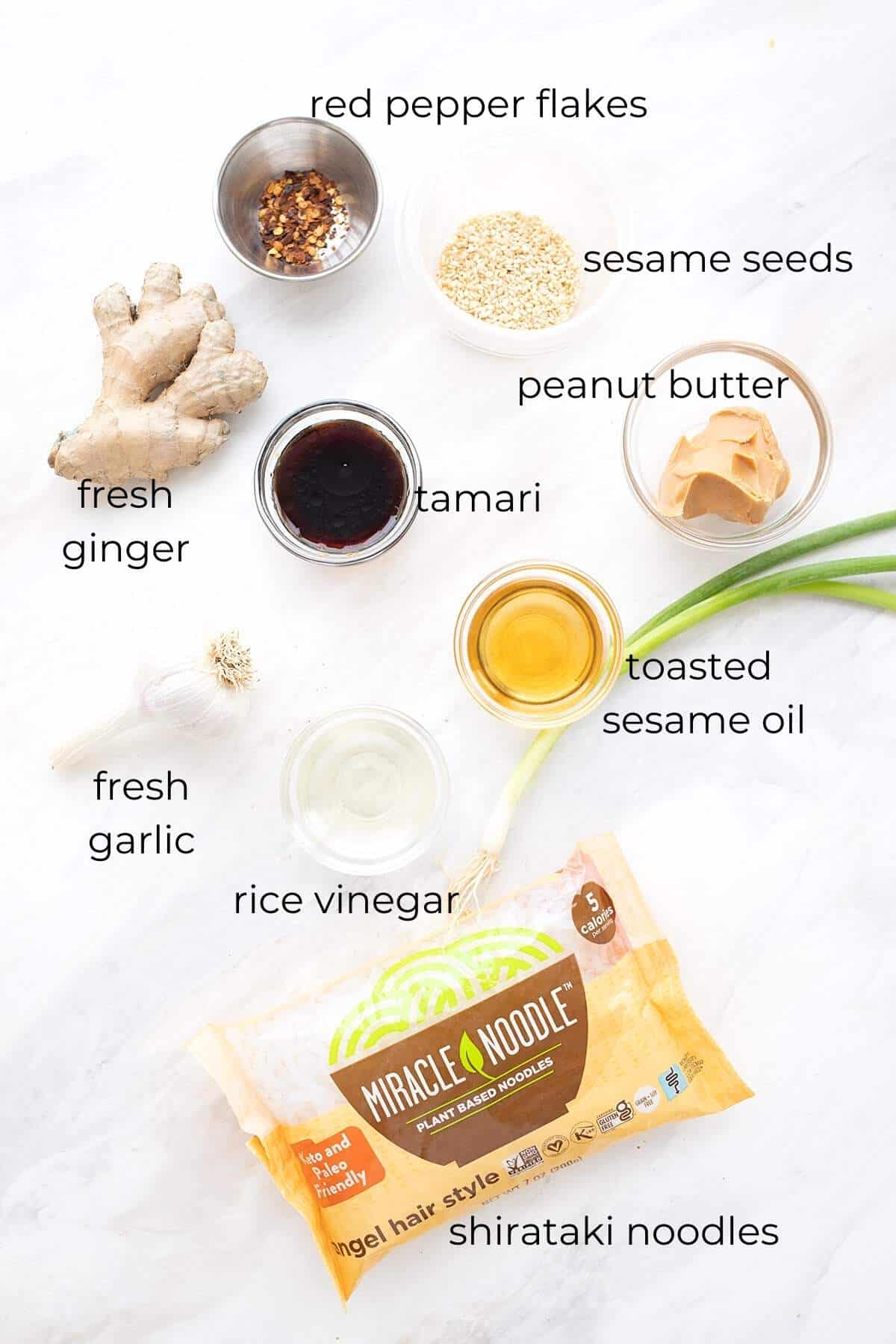
- Shirataki noodles: These low carb, high fiber noodles are an excellent keto-friendly pasta alternative. You can use other kinds of keto noodles but they may require a different cooking method prior to adding the sauce.
- Peanut butter: I recommend creamy natural peanut butter with no added sugar. My favorite is the dark roasted peanut butter from Santa Cruz. You can also use almond butter.
- Sesame oil: Use toasted sesame oil for the sauce, as it adds much more sesame flavor than the plain variety.
- Tamari: I use this gluten-free soy sauce frequently in my keto recipes, as it has more umami than regular soy sauce.
- Rice vinegar: Be sure to use regular rice vinegar, as seasoned rice vinegar contains sugar and has quite a few carbs. You can also just use apple cider vinegar.
- Avocado oil: You need oil for frying the noodles, but it doesn’t have to be avocado oil. Olive oil or plain sesame oil works just as well.
- Fresh ingredients: Ginger, garlic, green onion.
Step by step directions
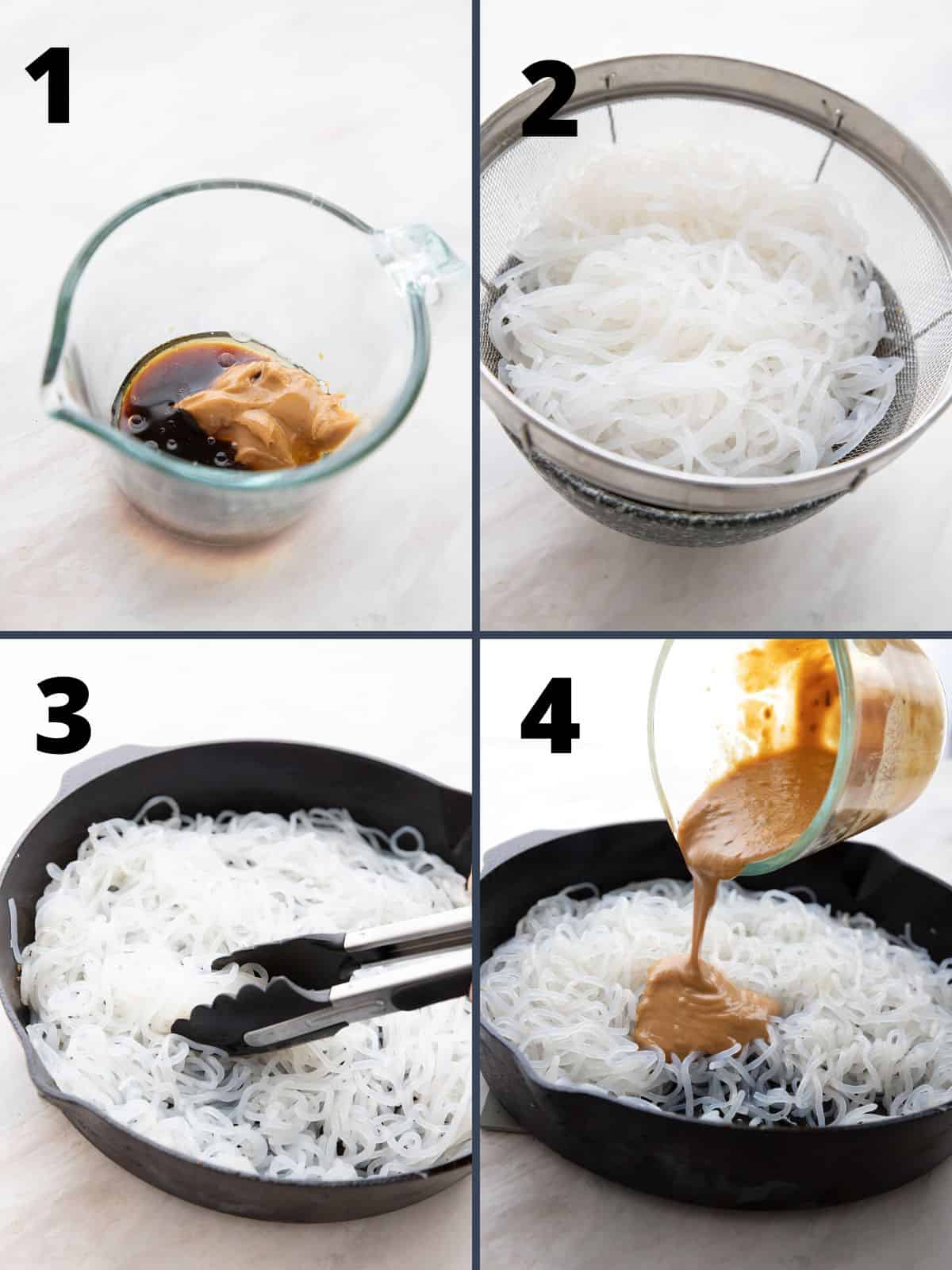
1. Make the sauce: Whisk together the peanut butter, sesame oil, tamari, rice vinegar, garlic, ginger, and red pepper flakes.
2. Rinse the noodles: Drain the noodles in a sieve over the sink, then rinse several times with fresh water.
3. Sauté the noodles: Heat some additional oil in a pan and add the noodles. Cook, stirring frequently, about 3 minutes.
4. Add the sauce: Pour the sauce over the noodles and toss well to coat. Remove from heat and garnish with the green onion and sesame seeds.
Expert Tips and FAQ
Be sure to drain the noodles and rinse them very well, as this helps eliminate the fish odor.
These keto sesame noodles can be made several days in advance. In fact, I find that the flavor almost gets better as it sits! Keep them refrigerated in a covered container. You can then serve them cold or room temperature, or you can rewarm them gently in a pan or in the microwave.
These low carb noodles are perfect for people on a keto diet. This recipe for keto sesame noodles has 6g of carbs and 2.6g of fiber. Thus it has only 3.4g net carbs per serving.
Made from the fibrous konjac root, shirataki noodles are high in soluble fiber, which acts as a prebiotic and can improve gut health.
I have experimented with many methods and I find that pan-frying produces the best results. It coats the noodles in oil and butter and helps cook off the funny odor from the liquids. It also improves their texture, making them less rubbery.
More delicious Keto Asian-style Recipes
- This Keto Korean Beef is one of my most popular dinner recipes. It’s a great way to use zucchini noodles.
- My whole family adores this Easy Keto Beef and Broccoli!
- I make Keto Pad Thai with shredded cabbage in place of the noodles and it’s so tasty.
- I’ve been making Keto Thai Basil Chicken for over 8 years and it always meets with approval.
Keto Sesame Noodles Recipe
Ingredients
- 2 tbsp creamy peanut butter, (all natural)
- 2 tbsp toasted sesame oil
- 1 tbsp tamari, (or soy sauce)
- 1 tbsp rice vinegar, (or apple cider vinegar)
- 2 cloves garlic, minced
- 2 tsp minced fresh ginger
- 1/4 tsp red pepper flakes, (optional)
- 12 ounces shiritaki noodles, (two 7-ounce packages)
- 1 tbsp avocado oil, (or olive oil)
- 1 medium green onion, chopped
- 1 tbsp toasted sesame seeds
Instructions
- In a glass measuring cup, combine the peanut butter, toasted sesame oil, tamari, rice vinegar, garlic, ginger, and red pepper flakes. Whisk until well combined and smooth.
- Drain the noodles in a sieve and rinse well.
- Heat the avocado oil in a medium skillet over medium heat. Once hot, add the noodles and sauté 3 minutes.
- Add the sauce to the pan and stir to combine well and coat the noodles. Remove from heat and garnish with green onion and sesame seeds.
Nutrition
Nutritional Disclaimer
Please note that I am not a medical or nutritional professional. I am simply recounting and sharing my own experiences on this blog. Nothing I express here should be taken as medical advice and you should consult with your doctor before starting any diet or exercise program. I provide nutritional information for my recipes simply as a courtesy to my readers. It is calculated using MacGourmet software and I remove erythritol from the final carb count and net carb count, as it does not affect my own blood glucose levels. I do my best to be as accurate as possible but you should independently calculate nutritional information on your own before relying on them. I expressly disclaim any and all liability of any kind with respect to any act or omission wholly or in part in reliance on anything contained in this website.
Free Bonus: Secrets to Keto Baking!
Sign up for your favorite recipes delivered straight to your inbox plus get our FREE bonus: Secrets to Keto Baking!












I wasn’t a huge fan alone. With the pepper steak recipe I really enjoyed it though.
My husband said too much sesame oil. I didn’t think so. I didn’t use toasted sesame though.
Well, you didn’t make it as written then. Because toasted sesame oil is absolutely critical to the flavor. It’s very different than plain sesame oil.