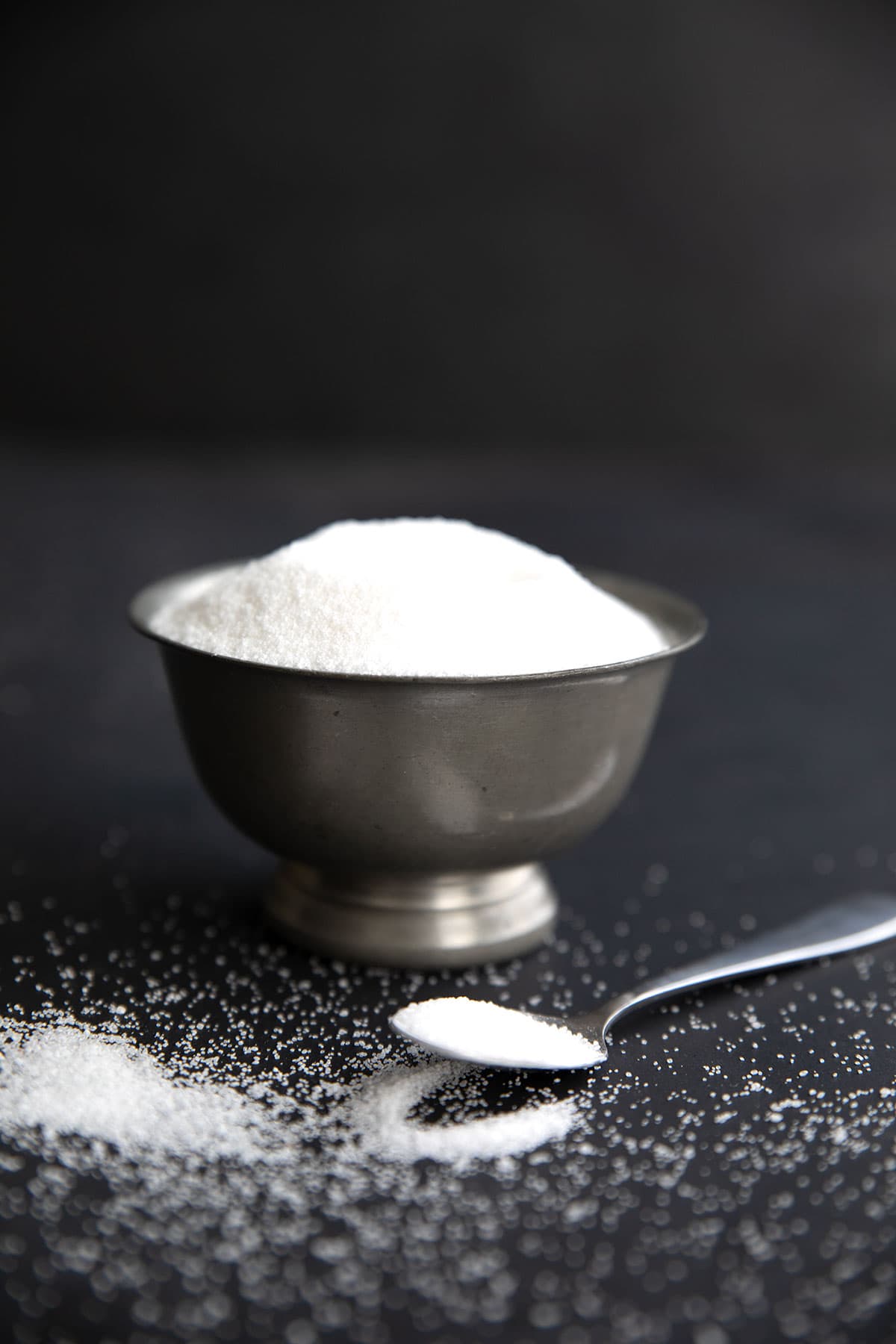
Erythritol is a common alternative to sugar. But is has come under fire recently for potential health concerns. Is it still safe to eat? Let’s discuss.
I have built a successful business and career on keto baking. I pride myself on my in-depth knowledge and understanding of low carb ingredients and how they behave. And many readers turn to me for advice on how to use these ingredients to get the best results.
One of those ingredients has recently come under fire (again). I’ve had numerous messages asking for my thoughts on the study about erythritol and blood clots. It has certainly raised concerns and I feel it is important enough to warrant a full discussion.
So let’s dig in.
Please note that I am not a medical professional, nor do I have any expertise in this matter. These are entirely my own thoughts and opinions, and should not be construed as medical advice. Readers are encouraged to consult with their physicians if they concerns.
The study in question
In case you are unaware, erythritol was in the news recently because of a study that links consumption to blood clotting. This same association came up in 2023 in an observational study that had notable issues. The recent study, however, is a clinical trial. You can read the full article HERE.
The researchers compared two groups of 10 healthy participants (20 subjects total). The first group consumed 30g of erythritol in a water solution, the other group consumed 30g of glucose in a water solution. Their blood plasma was tested both before and after consumption. The group who consumed erythritol had a significant increase in “platelet aggregation responses”, indicating a greater tendency toward forming clots. The subjects who consumed the glucose solution saw no significant rise in these factors.
The researchers conclude that consumption of erythritol may enhance the risk of thrombosis events. This in turn increases the risk of heart attacks and strokes.

Study limitations
As with any clinical trial involving human subjects, this study has its limitations. And several of these are acknowledged by the authors themselves. Small sample size notwithstanding, I see some further issues that need to be recognized.
After digging into the original study, as well as reading some professional analyses, a few things jumped out at me. I will outline them as clearly as I can.
1. Amount of erythritol: The subjects drank solutions that contained either 30g of erythritol or 30g of glucose. That is a lot of erythritol to consume in one sitting! The authors state that they chose that amount because it’s “a quantity commonly found in erythritol-sweetened foods”. I take serious issue with this statement.
Granted, I do not use a lot of pre-packaged drinks and bars, but I have NEVER seen that amount in ANY product I have ever used. The sweetened drinks I occasionally consume, such as Remedy Kombucha, contain all of about 4g of erythritol. The NuTrail granola that I enjoy while traveling contains only 5g. The HighKey cookies that I snack on once in a while contain 8g.
Even the sweetest of my recipes (and I am talking recipes like Keto Chocolate Cake) contain about 20g of erythritol. And let me be clear, I do not consume all of these things in a given day. They are all once-in-a-while treats.
Let me reiterate: 30g of erythritol in one sitting is a huge amount.
2. Only erythritol was consumed: The participants were told to fast overnight, and their blood was tested before and after consuming the erythritol or glucose solutions.
That means that they consumed these solutions on an empty stomach with no other food or nutrients that might slow down the absorption of the erythritol or glucose.
This is a highly artificial scenario. I don’t know anyone who gets up and drinks a glass of sugar water or erythritol water for breakfast! The very thought makes me feel a little queasy.
Other macronutrients such as protein, fat, and carbs, have a mitigating effect on the absorption of every other nutrient. Fat, protein, and fiber are all known to take much longer to digest, slowing down the whole process. For example, something like Chocolate Protein Muffins, contain 8g of erythritol, but they also contain 13g of fat, 5g of carbs, and 12g of protein.
We don’t consume erythritol in a vacuum, as they did in this study. So we don’t really have any idea how quickly the erythritol would be absorbed into the bloodstream in a real life situation.
3. Timing of blood tests: The participants underwent blood draws to test their plasma at baseline (before consumption) and 30 minutes after consumption (post-prandial).
This is the part that has me flummoxed. Why would they not test the subjects at a number of intervals after consumption? As anyone with diabetes can tell you, testing at different post-prandial periods (1 hour, 2 hour, etc) can give you vastly different readings in blood sugar. Surely it gives vastly different readings in erythritol too. But they only tested once, quite soon after the subjects consumed the solutions.
The authors do acknowledge that this is a limitation, but state that they wanted to minimize the inconvenience to their subjects, as well as study the “the impact of acute dietary exposure” to erythritol.
But as my other two critiques point out, the “acute dietary exposure” of 30g of erythritol consumed on an empty stomach is a highly artificial and, to be frank, HIGHLY UNLIKELY scenario. Unless you get up in the morning and drink 5 or 6 erythritol sweetened beverages in a row, with no food. Does anyone actually do this?
With this methodology, we are left with no real understanding about what happens in the hours or days after consuming erythritol. Nor do we have any insight into what happens to those of us who consume much more moderate amounts of this sweetener, but on a more regular basis.
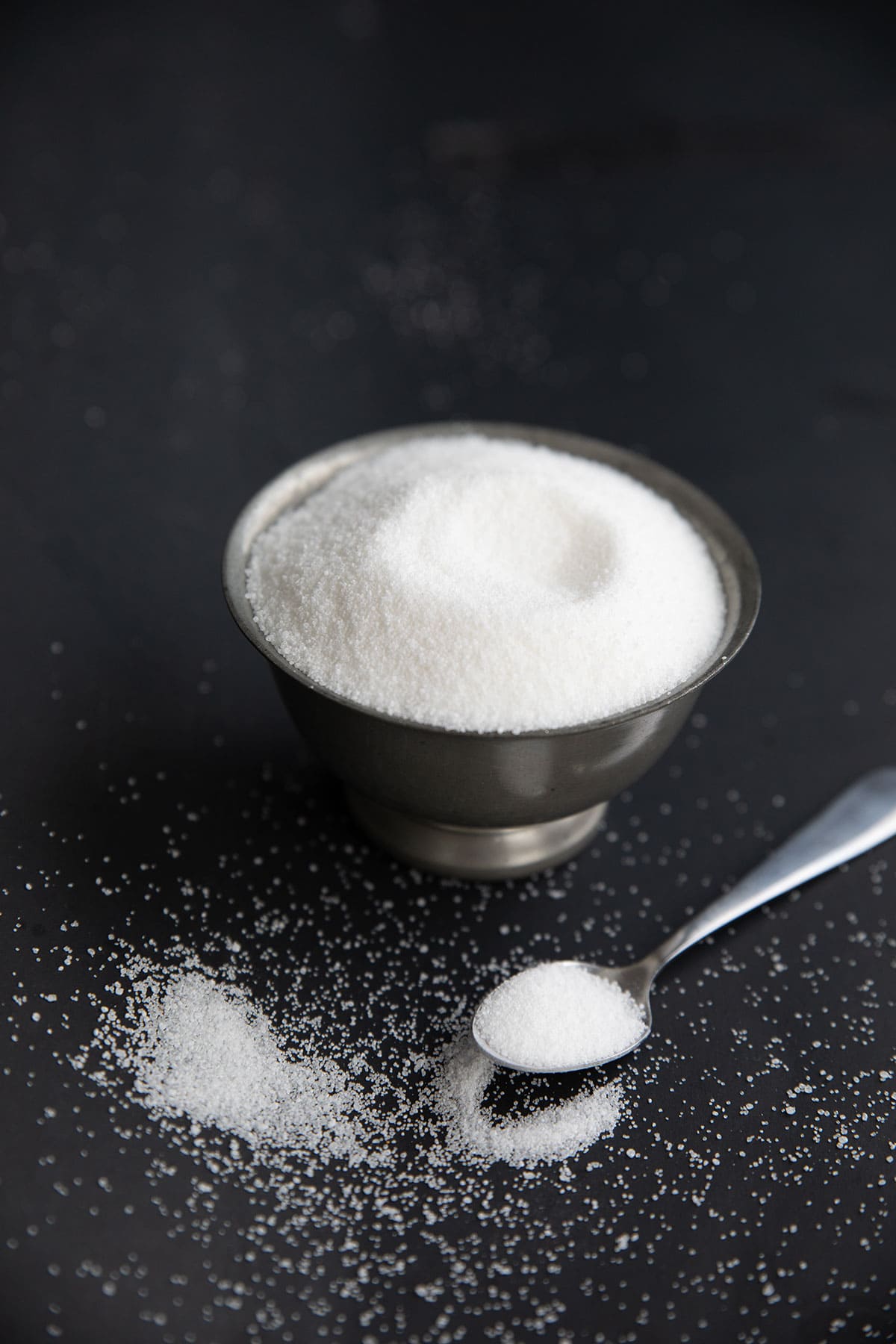
Should you avoid erythritol?
None of my study analysis is meant to downplay the potential health risks of consuming erythritol. The recent studies do bring up some serious concerns about the use of alternative sweeteners. So should you avoid it altogether?
I know you want me to give you definitive answers on this matter, but I simply can’t do that. The intent of this article is to give you some context so that you can make a more informed decision. We all must evaluate our own comfort level with any dietary choices that may have associated health risks.
As keto and low carb dieters, we do this all the time as it is. We are constantly bombarded with warnings about how much fat or salt we eat, or how we don’t eat enough fiber to be healthy. Or how carbs are NECESSARY for survival. Or how ketosis is bad for you.
I have been consuming erythritol for over 14 years. While I haven’t had my blood tested for platelet aggregation, I haven’t had any signs of adverse health effects. Mind you, I don’t consume the 30g they tested in one sitting, and I’d say it would be a very rare occurrence that I consumed that much in a whole day. But I do consume moderate amounts with some regularity.
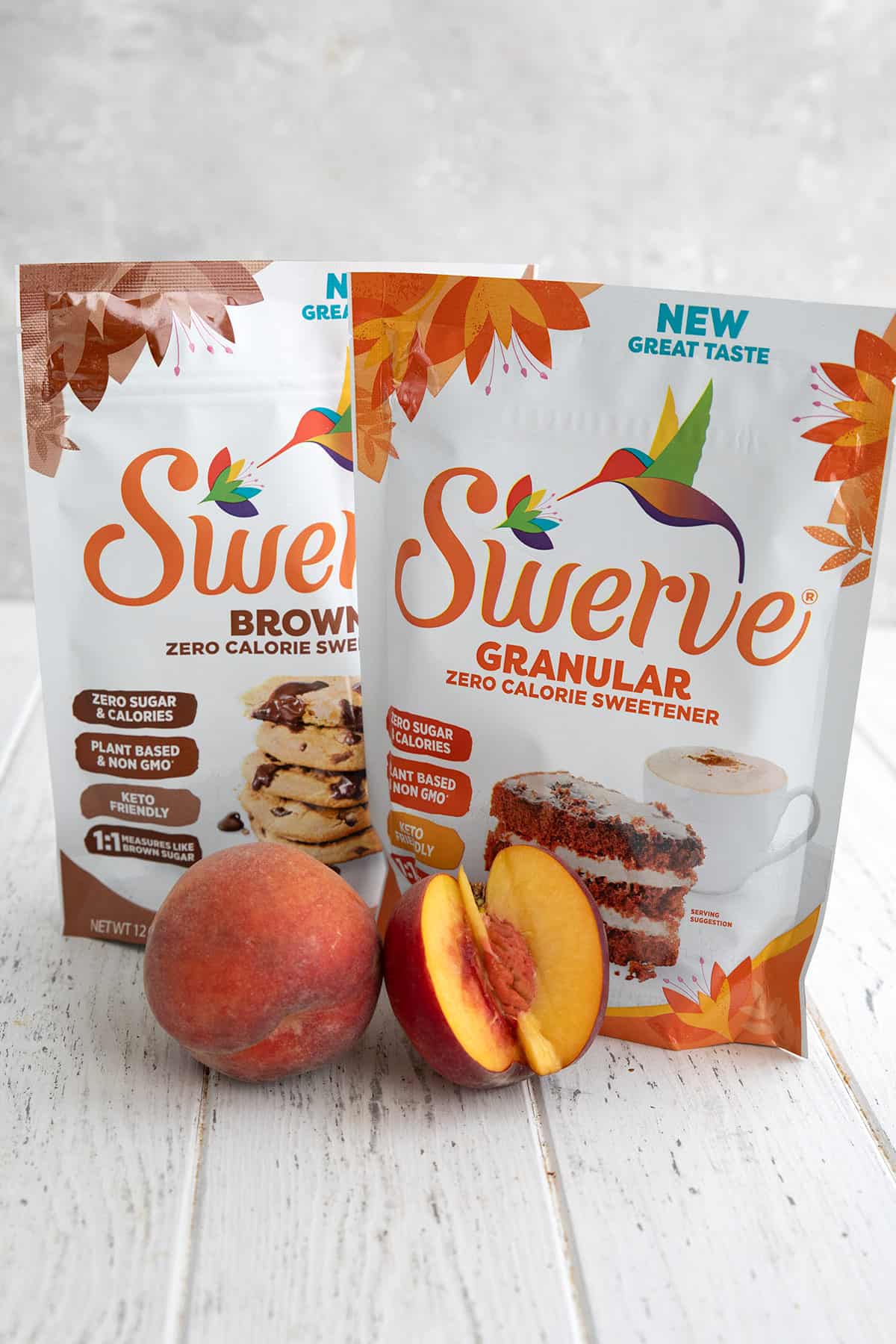
That said, I started to cut back on my own consumption after the observational study came out in 2023. I have not eliminated it but I often cut it with other sweetener options such as allulose, and sometimes with stevia extract. I am a huge fan of the SweetLeaf Sweet drops for an added boost of sweetness and keep the little squeeze bottles in my purse and my baking cupboard.
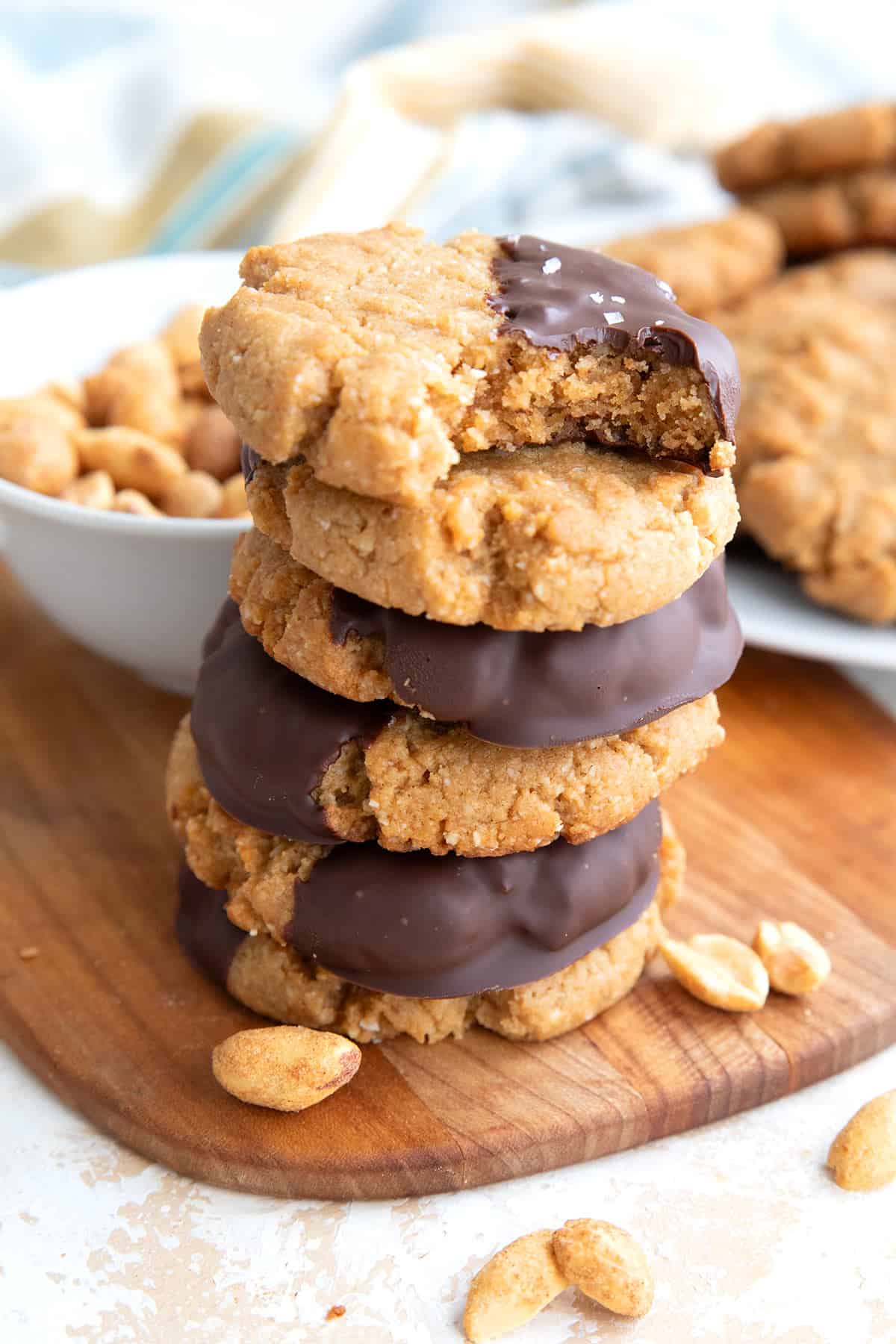
Erythritol in keto desserts and treats
So what about all the wonderful keto cookies and delicious treats on this website? Will I stop creating them? That would be a firm HELL NO! Because that would essentially take most of my joy out of life.
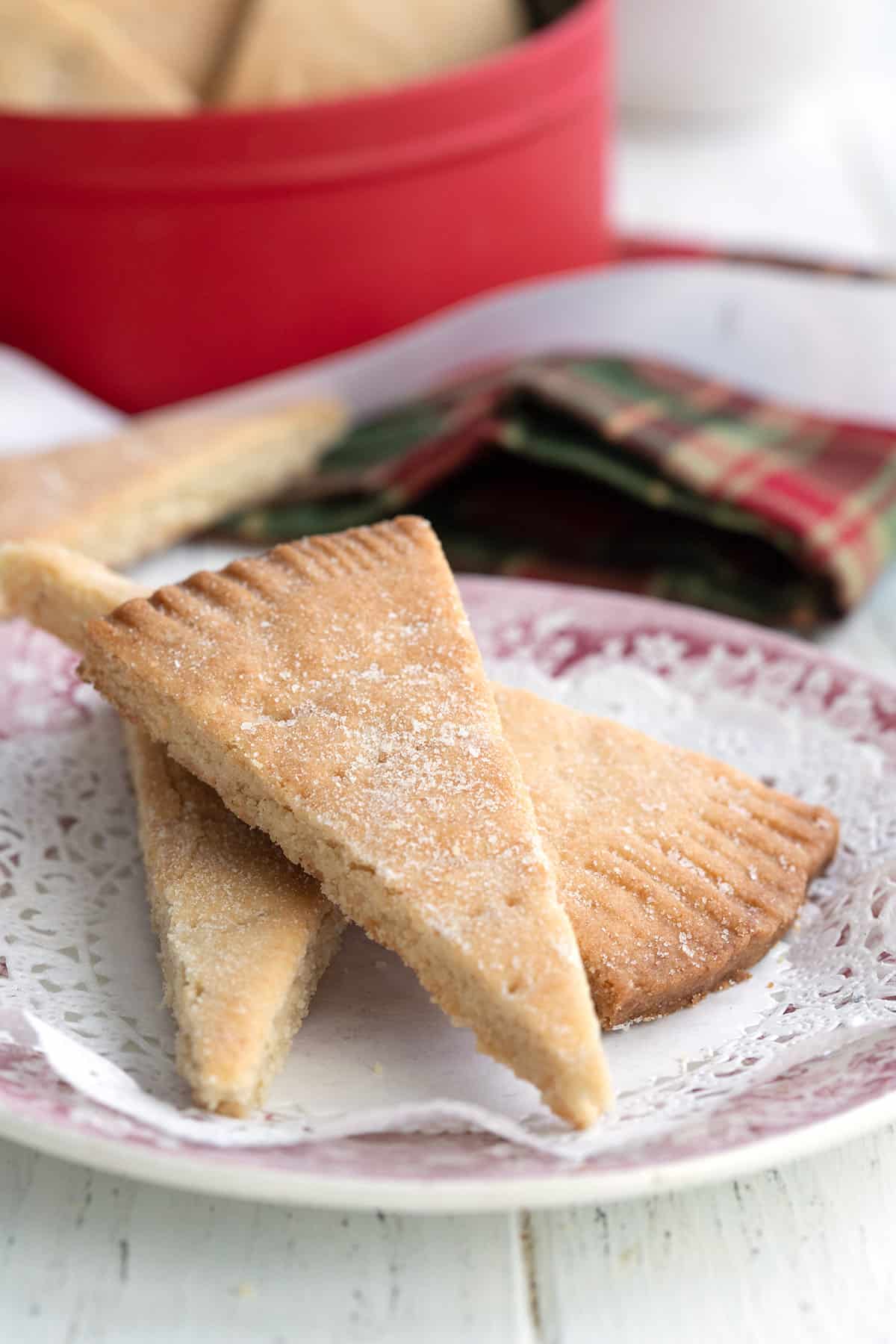
Will I stop using erythritol sweeteners altogether? No, because sometimes erythritol is the best sweetener for the job. If you follow me, you know that I am a stickler for texture and consistency. And if you’re looking for a crisp texture for in a recipe like keto shortbread cookies, only erythritol will work.
But I am being much more mindful of how much I use in any given recipe. I also try to provide as many sweetener options as I can in the Tips section of each blog post. I can’t test every possible variation myself but I can give an educated guess as to the outcomes and any accommodations you might need to make. I started this practice quite some time ago and will continue to do it.
I have created an enormous number of recipes over the past 14 years, some of which live on this website and many of which do not. I cannot go back and fix every recipe already existing on my site or in my keto cookbooks. But I try to address these things as they come up.
Is this my final word on the situation? No, because it is emerging and changing as we speak. There will be future research and studies that may give us a clearer picture of the risks of consuming erythritol. I am going to do my best to stay abreast of it as much as possible and I am certainly open to discussion and hearing your thoughts too.
Nutritional Disclaimer
Please note that I am not a medical or nutritional professional. I am simply recounting and sharing my own experiences on this blog. Nothing I express here should be taken as medical advice and you should consult with your doctor before starting any diet or exercise program. I provide nutritional information for my recipes simply as a courtesy to my readers. It is calculated using MacGourmet software and I remove erythritol from the final carb count and net carb count, as it does not affect my own blood glucose levels. I do my best to be as accurate as possible but you should independently calculate nutritional information on your own before relying on them. I expressly disclaim any and all liability of any kind with respect to any act or omission wholly or in part in reliance on anything contained in this website.
Free Bonus: Secrets to Keto Baking!
Sign up for your favorite recipes delivered straight to your inbox plus get our FREE bonus: Secrets to Keto Baking!











Thank you for the insight! I always like to try and follow the “money trail” of these studies if possible. It would be interesting to see if the sugar industry donated anything to this particular study.
Thank you for all this information.
Thank you for your common sense analysis of this subject. I feel like the consumption of loads of sugar and white flour far outweigh any adverse effects we may get from a little erythrothol!
Excellent article, and I agree with the points you made about the huge amount of erythritol, taken all at once, with no other food. Would you know if they are doing studies on all the sweeteners? I know stevia and monk fruit stand out as 2 of the top “safe” sweeteners but do we know that for sure after they have been “manhandled” and prepared for shelf life ? Thank you for sharing.
They all get studied separately, with different methodology, and for different reasons, which makes it hard to compare studies directly. At this point, I have not seen any solid research on those sweeteners after they’ve been processed vs. their pure form.
Thank you for your honest and personal insight on Erythritol. Makes me think of a loooong time ago when the “experts” fed laboratory rats with saccarin, and deemed this to cause cancer.
I believe a real controlled clinical trial will result in a very different conclusion to this present “trial”
Oh, and I will continue using Erythritol, being the best tasting non-sugar sweetener out there. Also, this is just my opinion.
Thank you for this Information and opinions. I appreciate your attention to the possible concerns of we followers of your excellent site!
THANK YOU! Just here to say thank you for this article and your insights about erythritol. When I first heard about the study and its findings I though oh great here’s one more thing we can not have. Then I read more into it, and while I am not scientist or chemist, the study seemed inconclusive based on the conditions the study was conducted in. It could not possibly be accurate because as you’ve said that is an enormous amount of erythritol to consume in one sitting. I am at a high stroke risk as my mom had two and her sister had one. I am now very careful with what I eat for the last four years, and I proud to say I have lost almost 75 pounds so far and have almost reached my goal weight. I cannot thank you enough for your creativity and insights into “alternative” or “hippie” baking. You helped change my life!
thanks for giving an executive summary of the research. I like your balanced approach & open mind. if we were to find out that it did have potential significant impact, we’d still have to make up our own mind about whether it’s benefit in helping us keep extra weight off outweighs the danger. certainly being overweight and drinking sugar or high fructose corn syrup is much more dangerous for every bodily system then the potential for blood clots. not saying they’re not serious. but I think will balance diet is more important.
I’ll pay more attention to how much erythritol I’m using in things like lemonade and Thai iced tea (staples of my summer). I’ve never weighed it, but it’s quite a bit. but like you say I don’t sit there and drink the entire court in one go! Maybe I’ll start mixing it up and using other sweeteners, too.
You are completely correct to question how this tiny study was conducted. I worked on pharma clinical trials for over 30 years after laboratory technologist training and that study would not pass muster at any level. It’s critically necessary to use real-world scenarios to evaluate the health impact of food alternatives and supplements. Had they evaluated 100 grams of chocolate chip cookies with each type of sweetener, that’s a fair comparison. Please continue to spread the good word. I love your recipes and at 67, I am far healthier (and lighter) after eating keto for 4 years when compared to my 50s. Thank you!
I very much appreciate your input on this new study. I also much appreciate your recipes that I find helpful with my own style of cooking and baking. Keep up your creative good work.
Thank you
Hi! I just stopped by this post to tell you that you did an excellent job of evaluating and explaining this article! I AM a scientist (Ph.D. in Biochemistry) and a Healthcare Provider (DNP), and I even worked with platelets from human blood donors for my thesis. This study was well done, and honestly, if they really had all their volunteers fast and they really had no other cardiovascular health conditions, they accomplished what they wanted to–to find a singular association between ingestion of a single substance and a given response. You asked an excellent question about why they didn’t perform several timepoints after ingestion instead of a single one. I would’ve liked to see that too. Ditto on the boatload of a dosage.
As far as what it says about risks and benefits of erythritol, it does in fact say very little. Honestly, there are loads of things that adversely affect blood clotting. We used to get donors from the medical school who were locals who grew their own crops, and we could always tell when it was collard green season, as their blood was so hypercoagulable (extra clotty)due to the extra vitamin K, we could barely use it. It probably didn’t help that they were fixing their collards with fatback and bacon grease.
So if anyone wants the educated opinion of someone who has worked with platelets and understands heart disease pretty well: This study was well done, but by itself, tells us nothing about the safety of consuming erythritol. All good things in moderation is a good motto to live by.
Thank you so much. Great input.
Best reply! Thank you for pointing out the science or lack thereof. Your reply should always be the first that comes up. Well said!
Thank you for the information.
I started following your blog about ?yrs ago ( can’t remember) ,but for a long time. It really is a scary world we live in, either , Monsanto trying to poison use & big pharmacy is selling us a pill. The crap that the FDA always in our food is a joke ( not allowed in Europe). I remember when saccharine came out it caused cancer, but you would have to drink a tanker truck of soda.
Thank you for addressing this so thoroughly. My first thought was of how, every study conducted will list some negatives about whatever the item/product is. If I listened to all of them, there would be nothing left for me to eat/use. I always say ‘follow the money’ as a guide to validity. I will continue using the various sweeteners, far better than consuming a giant amount of sugar imo.
Hi Carolyn!
Your explanation of erythritol gave me a sense of calmness, knowing that you’ll continue to use it in your recipes. I feel like those “researchers” who do these types of testing are only trying to get people to cross to the “dark side” (sugar)! Anyway, thank you for explaining this and keep those yummy recipes coming!
Why would you think that? People do research because they have questions, and I for one, am happy for all their research so I can continue to make good choices. We should ask questions about everything we ingest.
I really appreciated your thoughts on this topic they were very rational and knowledgeable.
My first thought after reading the initial study was “Why?” What event/s took place to necessitate the need to scrutinize Erythritol suddenly? My second thought as an American noting the study was done by the NIH was who sponsored/paid for the study. After the American Heart Association pulled that crap study on Coconut Oil a few years back. I’ve lost trust in American Medical Studies. Did the Cane Sugar Industry fund/sponsor the Erythritol study? Like the Walnut Growers, Almond Farmers, and Statin makers funded/sponsored The AHA study on coconut oil?
Is it another McDonald’s study trying to convince us that a 100 calories is the same no matter the source? Both the Pharmaceutical and Food Industries have too much power and say. In the American Medical & Healthcare Industries. So until a world wide studies prove the connection. I’ll continue to use Erythritol sparingly as I have. Along with increase intake of foods that thin the blood like leafy greens, green tea, ginger, cinnamon, fish, garlic, etc.
Thanks for your thoughts on this recent erythritol study.
I also had the same thoughts on each of the points you addressed.
I hope a more thorough examination will be done, on the amount of erythritol usually ingested at one time.
These sweeteners have been life changing for people with blood sugar issues to enjoy eating and not always denying themselves of a sweet treat!
Everything in moderation is a good way to go.
Thanks for the information re Erythritol. Much of it affirmed my own thoughts however it was gtreat to understand the testing process. Like you I will continue to be watchful and use Erythritol with caution and of course eat sweets in moderation! I have found your recipes incredibly helpful in my weight loss and think my health is so much better with 60 pounds less to stress about.
Keep up the good work!