

Take the guesswork out of baking with almond flour! This comprehensive guide will teach you everything you need to know about this low carb, gluten-free flour alternative. Learn to make delectable keto desserts that rival anything from a bakery.

I’ve been baking with almond flour for so long that it’s become second nature to me. But it wasn’t always that way! Once upon a time I was like you, wondering how ground nuts could possibly make tasty baked goods. I made the classic error of trying to replace wheat flour cup-for-cup with almond flour. What a mess! My low carb cakes collapsed in on themselves and my keto cookies spread out too much. But I was determined to get it right.
Every “failure” taught me something important about how almond flour behaves, and that has completely changed the way I bake. Almond flour has become one of my keto pantry staples and I am never without a big bag of it. I love how versatile it is, and I use it for everything from fluffy keto muffins to the coating for keto chicken piccata.
But I also know how intimidating it can be for beginners – you feel like you are learning to bake all over again. This guide is here to walk you through everything I’ve learned over the years. I share all of my best tips and tricks so you can skip some the frustration and start baking with confidence. Because I firmly believe that once you understand how to use almond flour, you will come to love baking with it as much as I do.

What is Almond Flour?
Almond flour is made from finely ground blanched almonds. It has a light texture and neutral flavor, making it one of the most popular flours for low-carb and gluten-free baking. It’s rich in fiber, protein, and healthy fats, so it’s ideal for making keto desserts and treats.
Almond flour has only 5 grams of carbs per 1/4 cup, whereas wheat flour has 23 grams of carbs.
Many brands bill themselves as “finely ground” but are more coarse than I like. My favorite brands include Bob’s Red Mill, King Arthur Flour, and Wellbee’s. Blue Diamond is a cost-effective choice, although it’s a little more coarse than others.
Almond Flour vs Almond Meal

Almond flour: Made from blanched almonds, finely ground, pale color, and the best choice for cakes, muffins, and cookies. It tends to be more expensive but produces a finer texture.
Almond meal: Made from almonds with the skin on, coarser in texture, darker with flecks, best for coatings and more rustic recipes. It’s less expensive but baked goods can be coarse and a little gritty. They also fall apart more easily, as there is less cohesion.
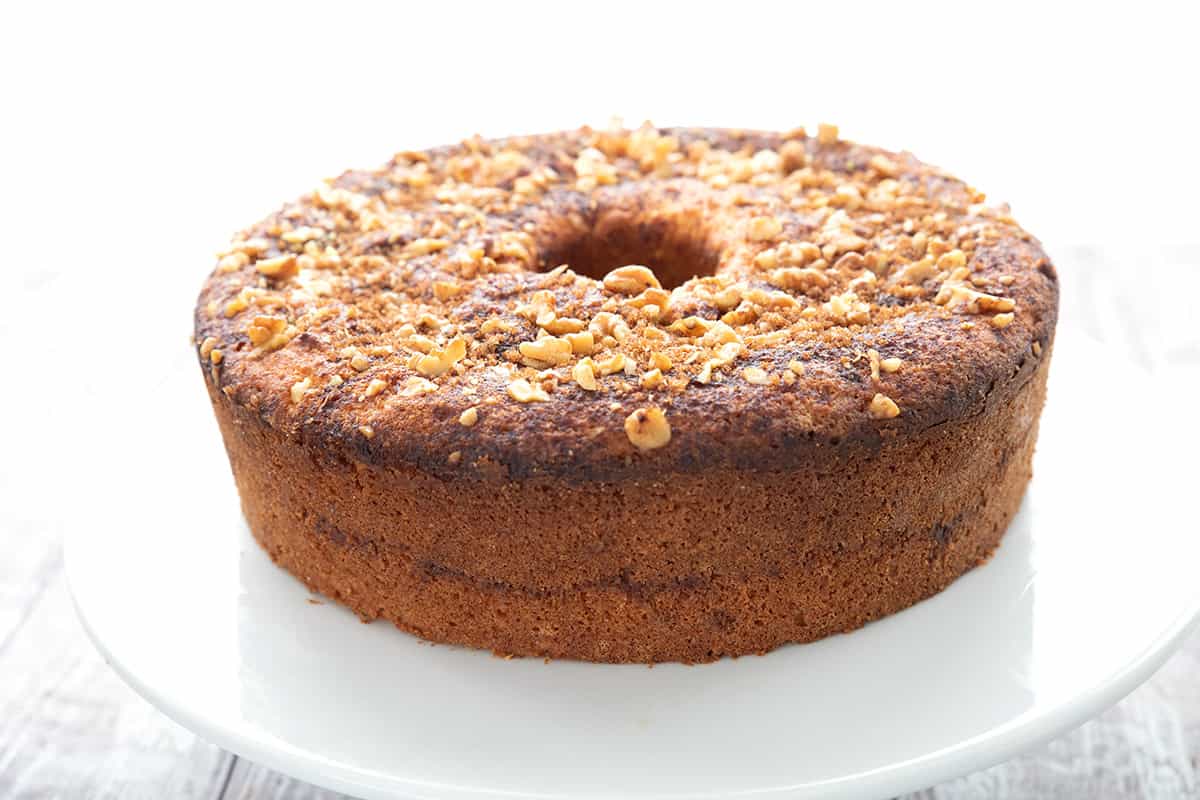
If you are new to keto baking, always start with finely ground almond flour for the most consistent results. Try easy recipes like Keto Almond Flour Cake or Keto Chocolate Chip Cookies to test it out.
How Almond Flour Behaves in Baking
- Gluten-free: Because almond flour doesn’t contain any gluten, it doesn’t provide as much structure as wheat flour. This can be offset with other ingredients, including eggs, protein powder, and xanthan gum.
- Fat and moisture content: Almond flour contains much more fat and moisture than wheat flour. Many almond flour baked goods need less oil and liquids than conventional recipes.
- Density: Almond flour is heavier than wheat flour and can produce dense baked goods if adjustments aren’t made. More leavening agent (baking powder or baking soda) is required for a proper rise.
- Not as fine: No matter how finely ground the almonds are, it won’t ever be as fine and powdery as wheat flour. But with proper care, you can make cakes and cookies that have a tender crumb and aren’t gritty.
Try my recipe for Keto Chocolate Chip Muffins to see how I use other ingredients to create a good rise and fine texture with almond flour.
Tips for Substituting Almond Flour
There is no simple formula for substituting almond flour for wheat flour – it all depends on what you are trying to make. Cookies are dense and crunchy whereas cakes should be light and fluffy, and they are going to take very different ratios of almond flour to other ingredients.

- No 1:1 swaps: For most recipes, like cakes and muffins, you will need more almond flour than wheat flour. When I am making over a recipe, like my Keto Birthday Cake, I often use 1.5 times the almond flour than a conventional recipe would call for.
- Oven temperature: I often reduce the oven temperature by 25 degrees to avoid over-baking.
- Binders: As almond flour lacks gluten, I often increase the eggs. But be careful, as too many eggs can result in a rubbery texture! You can also add a little bit of xanthan gum (up to 1 teaspoon) for added structure.
- Protein powder: This is one of my best tricks for working with almond flour. Since gluten is a protein, another dry protein powder like whey or egg white, can help the baked goods rise properly and hold their shape. Try it out in recipes like Keto Zucchini Bread.
- Thicker batter: Be mindful that almond flour batter will always be thicker than those made with wheat. Resist the urge to thin it out too much, or you will end up with a soggy mess that won’t bake through.
Almond Flour vs Coconut Flour
You cannot sub coconut flour for almond flour in a 1:1 ratio. I cannot state this more emphatically! Don’t even think about trying it or you will end up with hard, inedible thing that is only good for using as a hockey puck. Check out my article on Baking with Coconut Flour for more information.
Coconut flour is an entirely different creature than any flour based on tree nuts. It’s fine, powdery, dense and soaks up liquids like nobody’s business. It also requires more eggs to keep the final product together. And you want to use far less coconut flour for a recipe than you would almond flour, sometimes as little as one-third.
For beginner keto bakers, I recommend sticking with well-tested coconut flour recipes, if that’s what you want to use. I have a wonderful list of Coconut Flour Recipes for you to try.
How to Measure Almond Flour

You have two choices for measuring almond flour accurately.
- Scoop and level: This refers to scooping your measuring cup into the bag or canister, and leveling off the top with a knife or other straight instrument. Never pack the almond flour into the cup. A well-written recipe will always specify whether you need to pack an ingredient.
- Weigh your almond flour: The most accurate method for measuring any ingredient is by weight, rather than by volume. If you have a kitchen scale, you can use that for almond flour. A cup of almond flour weighs roughly about 110 grams.
Storage and Shelf Life
Because almond flour has a high fat content, it can go rancid faster than wheat flour. Depending on how quickly you use it, you may want to store it in a fridge or a freezer.
I recommend making sure the storage container is airtight. I store unopened bags in my cool basement pantry. Any opened bags are transferred to an airtight canister in my baking cupboard.

Best Practices for Baking

- Let your almond flour baked goods cool completely. I can’t emphasize this enough. While it’s tempting to dig in soon after they are baked, they are very fragile at this point. The texture and cohesiveness of low carb baked goods always improves upon cooling and sitting. Crackers, cookies and tart crusts will crisp up better and breads and muffins will hold together better when left to sit for an hour or two.
- Room temperature ingredients. Make sure your eggs, butter, and cream or almond milk are at room temperature, unless otherwise specified by the recipe. If they are cold, your batter will clump up.
- Grease that pan well! Low carb goodies can stick more than conventional ones, so really work that butter or oil into the corners of your pan.
- Watch it carefully. Almond flour baked goods can also brown more quickly than wheat flour recipes. If I am adapting a wheat-flour recipe, I almost always lower my oven temperature by 25 degrees F, and I watch it carefully. If the top and sides are browning too quickly, I cover the pan with aluminum foil.
- Don’t over-bake. Oven temperatures can vary tremendously so please only ever use baking times as a rough guideline. What takes 20 minutes in my oven may take more or less time in yours. You should always set your timer for 5 minutes LESS than the baking time says, and then check on it every 5 minutes after that.
Freezing Keto Baked Goods
Most almond flour baked goods are freezer-friendly. I have successfully frozen cakes, muffins, cookies, scones, and even keto pie crust. I usually freeze after baking before I glaze or frost the baked good in question.
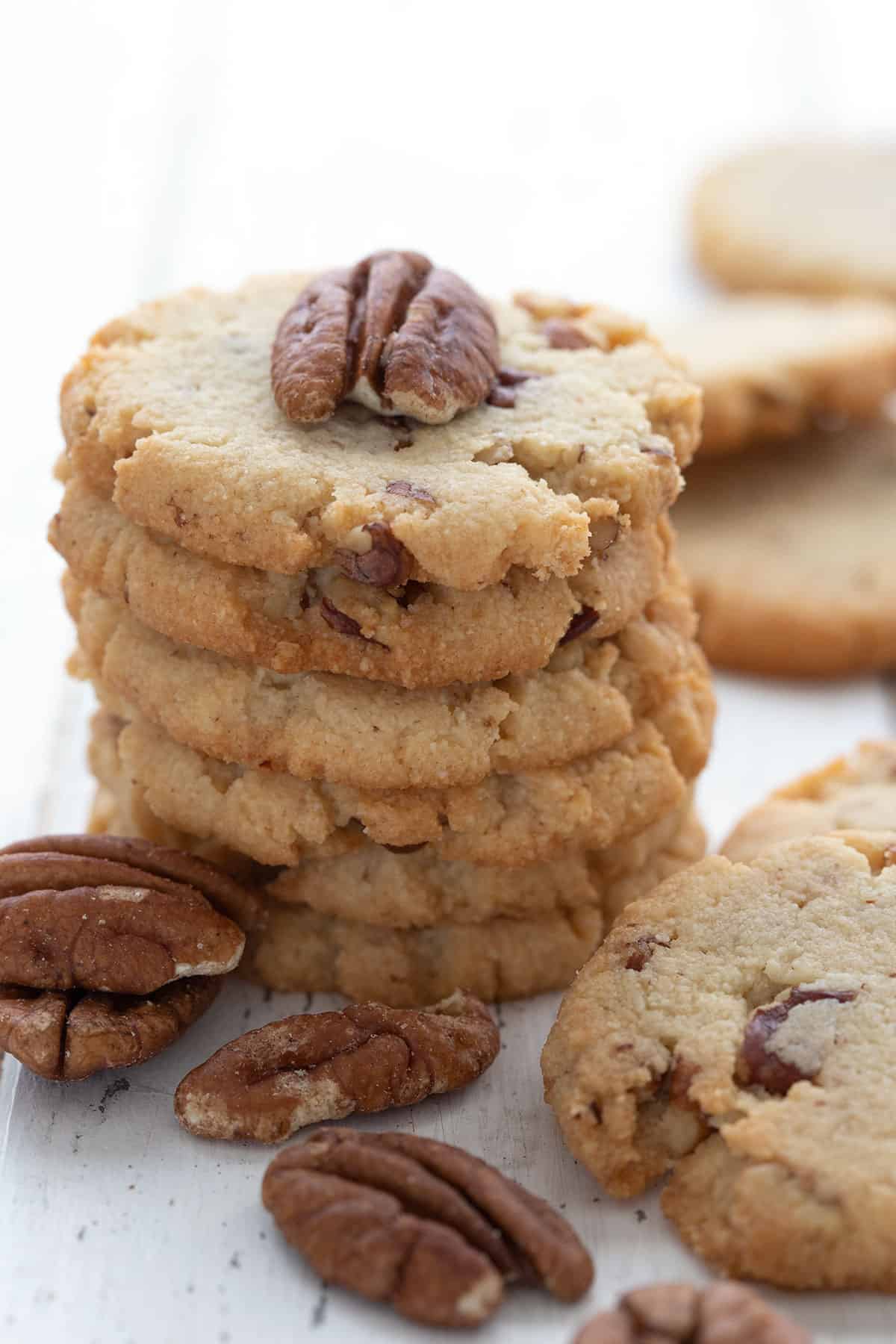
Raw cookie dough can also be stored in the freezer. I often have a roll of dough for Keto Butter Pecan Cookies in the freezer, so I can bake a few whenever I want. And when I make a big batch of cookies like Chewy Keto Ginger Cookies, I often roll them into balls and freeze some of the uncooked balls.
Frequently Asked Questions
You can make almond meal at home, but you likely won’t be successful at making finely ground almond flour. Small home appliances (food processors or blenders) are not strong enough to grind the almonds finely without turning them into almond butter.
Almond flour is a great choice for keto and low carb diets, as it has only 5 grams of carbs per 1/4 cup serving. It also has 3 grams of fiber, which means that each serving has only 2 grams net carbs.
Chances are that the almond flour you are using isn’t quite as finely ground as others. Blue Diamond and Kirkland (Costco brand) tend to be a little grittier than Bob’s Red Mill or Wellbee’s. But they are also more cost effective, so it’s a trade off.
If the cakes or muffins are crumbly, they don’t have enough binder in them. Eggs usually provide more structure, as does protein powder and xanthan gum. Consider adding an additional egg or more protein powder when you try again.
The best nut-free substitute for almond flour is sunflower seed flour. You can purchase it online or make your own at home, and it can be used cup for cup. Do be aware that leavening agents like baking powder or baking soda cause a reaction with the chlorophyll in sunflower seeds and baked goods can turn a funny green as they cool. But you can offset this by adding a tablespoon of an acidic ingredient such as lemon juice or vinegar. Make sure you read all my tips on how to make and use sunflower seed flour!
Almond Flour Recipes to Try
Ready to test out this versatile low carb flour? Here are a few of my most popular recipes to get you started!
- Keto Almond Ricotta Cake
- Keto Blueberry Muffins
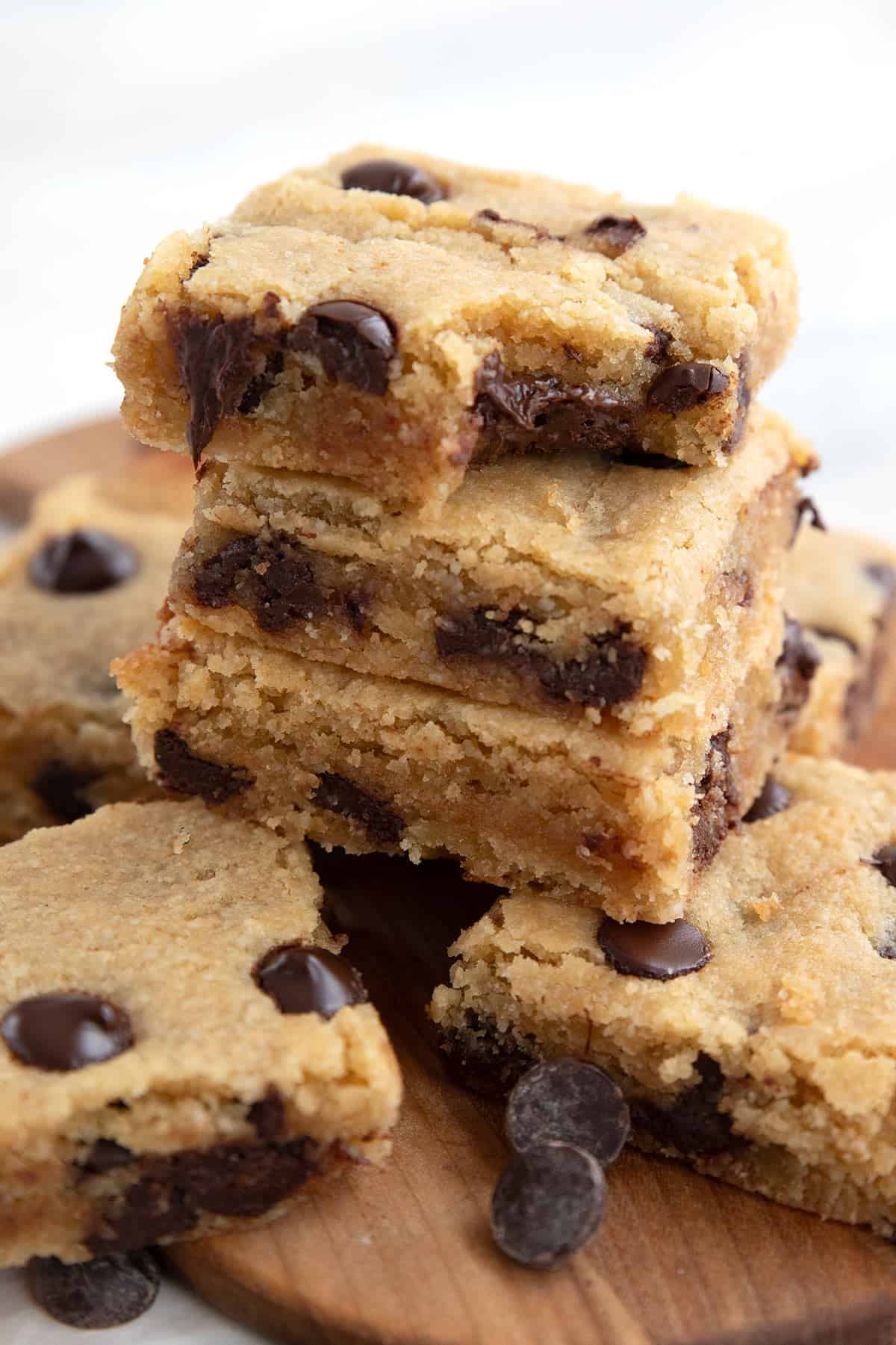
- Brown Butter Keto Blondies
- Keto Shortbread Cookies
- Keto Texas Sheet Cake
Have fun and let me know what you think! And if you have any other burning questions, leave a comment and I will do my best to answer them.
Nutritional Disclaimer
Please note that I am not a medical or nutritional professional. I am simply recounting and sharing my own experiences on this blog. Nothing I express here should be taken as medical advice and you should consult with your doctor before starting any diet or exercise program. I provide nutritional information for my recipes simply as a courtesy to my readers. It is calculated using MacGourmet software and I remove erythritol from the final carb count and net carb count, as it does not affect my own blood glucose levels. I do my best to be as accurate as possible but you should independently calculate nutritional information on your own before relying on them. I expressly disclaim any and all liability of any kind with respect to any act or omission wholly or in part in reliance on anything contained in this website.
Free Bonus: Secrets to Keto Baking!
Sign up for your favorite recipes delivered straight to your inbox plus get our FREE bonus: Secrets to Keto Baking!












I tried using almond flour to make waffles for the first time today — they were super bitter. Wondering if I did something wrong, does almond flour have a bitter taste naturally or maybe I bought a rancid bag. Thanks
I have never heard anyone complain that almond flour tastes bitter. What other ingredients did you use? I am concerned that you might have bought a rancid bag indeed!
I found the same. Almond flour made pancakes, biscuits, and waffles taste bitter.
Why my Almond Flour cookies, whic come out of the oven nice and crisp, turn limp and glob together after a few hours?
What recipe is it?
Do you suggest any modifications for gluten free/almond flour baking at high altitudes? I am about 5000 ft above sea level.
I haven’t ever baked at high altitude, but I asked a gluten-free friend who lives in Boulder and she says she doesn’t change anything at all and hasn’t had a problem.
Thank you, and thanks to your friend!!
Hi Carolyn,
I have been following and sharing your FB page and recipes for a bit and I love your blog.
I was looking for some type of ideas on how to use almond flour and this post hit it right no the nail- that was genius; no joke. On the joke note, love your funny memes and posts too 🙂
I would like to as for permission to mention this post on my article to be published, being that I am also trying to remove as much sugar and grains from our family’s diet as possibly.
Of course there will be the corresponding mention and link to your posts.
Thanks in advance for your time. Keep up the great work!
Astrid
Sure Astrid, that would be fine. Glad you find it helpful!
Ok great Merci!
I will be posting it soon- PB coming your way!
Have a great one 🙂
Thanks so much! For this and everything you do.
Hi Carolyn. I use Honeyville, all ingredients at room temp, but often my baked goods sink in the middle. I only use recipes from your site and those of your friend at @ Low Carbing Among Friends. What am I doing wrong?
Somehow there is too much liquid, and/or not enough protein. It’s hard to say if I am not in the kitchen with you but try adding a bit more protein powder and either reducing the liquid by a few tbsp or adding more almond flour by a few tbsp.
This is a great tutorial. Thank you so much. My hubby and I found almond flour to be pretty expensive so I had read that I could try making my own. I am using it right now in one of your recipes as the sour cherries on our tree have become ripe and wanted to make a dessert with some of them. Being new to all of this, I was disappointed in my attempt to make the blanched almonds into ‘flour’. It really was quite mealy…nothing like ‘flour’. I was afraid to keep going as I feared I would end up with almond butter. I thought my processor was pretty good…that baby will chop and grind up anything. I know from your comments it won’t matter for this crust but should I just bite the bullet and put out for the packaged almond flour…what we fund was ‘Red Mill Flour/Meal’ and I have to say it looked like flour just seeing it through the bag.
Would love your opinion. I am trying to fight some insulin resistance I seem to be developing….A1Cs are normal but fasting sugars are not. I am an RN and do NOT want to move on to being diabetic so am changing my (our!) eating habits now.
Blessings.
Hi Georgeanne. It’s true, you simply can’t grind almond flour fine enough at home. It will make a great crust, and some muffins will be good too, but if you’re looking for a fine-textured cake, you won’t quite get it. And I love Bob’s Red Mill, but their almond flour isn’t quite as fine either, although good for most baked goods. The cadillac of almond flour is Honeyville, which you can buy on the Honeyville website. Next to that, my favourite is from Oh Nuts!
Hi, Carolyn. Went shopping today to pick up some of the staples….some I couldn’t find and will order online. But I have 2 questions: I see that in a number of your recipes you use Stevia drops or extract……just wondering why you add those? Are the items not sweet enough with just the erythritol?? MUST these be used? Lastly, I was wondering why there isn’t a way to ‘save’ some of the recipes you have here to my ‘recipe box’ here on your site. I have a couple things I put in there but there were a couple recipes that didn’t have the option of saving them….for instance the recipe for your peanut butter/chocolate donuts. Should questions like this be addressed somewhere else?
Thank you 🙂
Georgeanne
Hi Georgeanne,
In some ways, my use of two sweeteners is just habit. I started doing it that way in the beginning and so I’ve just kept doing it. But here’s why: 1. Erythritol is expensive and stevia is not. That little jar of stevia extract will last a long time. My readers can’t always afford erythritol in full quantities so it helps to use a little less of it per recipe. 2. I’ve always found that using the two together helps increase sweetness and decrease aftertaste. Now that I use Swerve, I don’t have the problem as much with either sweetness or aftertaste, but again, my readers can’t always afford Swerve in full quantity.
I’d be happy to rewrite the recipes you want to save on Ziplist. It’s simply time and energy, so tell me which ones you want besides the donuts and I will make an effort to go back and put them in the Ziplist format.
Thanks!
Many thanks…..no problem…you have plenty to do. I will get it a different way. I look forward o trying some of these out. Thank God for your dedication!
Thanks for your help 🙂
Georgeanne
Thanks for the sharing !
Is there a difference when adding yeast to almond flour?
I wish I could tell you. Yeast is very tough with low carb and gluten free ingredients. Part of what makes conventional recipes rise with yeast is the way the gases get trapped by the gluten strands that develop. No gluten means no way to trap the gases properly. I haven’t experimented too much with yeast and low carb yet!
then maybeI I can give a try on a half-gluten recipe. Thanks!
I am looking for a bread recipe that does not include a nut flour as my son is anaphylactic to tree nuts. I am not having much success with other flour substitutions in the recipes . Please help
Does it need to be gluten free? Low carb?
I found your site tonight, and want to thank you for the information. However, what I’m trying to find out is if i can use the meal leftover from making almond milk. If it’s dried, would that be considered almond flour/meal? Everything else makes sense to me, but I’m just curious about that. Do you know ? and thanks!
It would not be almond flour, because it wouldn’t be fine enough. But you could probably use it as almond meal.
Thank you for this very informative article! I just found your website and am looking forward to trying many recipes. I personally am only really looking to reduce the carbs in my diet. I don’t need to remove gluten So do you think it would it be helpful to just add a spoonful of gluten to things baked with almond flour or is there another reason using whey is better? Thanks!
Whey powder adds protein, and since gluten is actually a protein, you need to replace it to helps things rise. I think adding a tbsp of gluten would help too, but you’d need a bit more than that to get things to rise properly. Not sure how much, you will probably have to experiment.
I’m trying to do low-carb too because my husband was just diagnosed with diabetes and I have wondered the same thing about just adding gluten to stuff! I tried it with buttermilk pancakes today and they held together a lot better (I think about two tablespoons for one cup flour, so a lot) than yesterday when I made them without. I don’t see why low carb dieters who don’t have allergies to gluten haven’t talked about this online. Gluten plus almond flour will be my best friend if I can figure out how they work together. So basically whenever your recipe calls for protein, just replace with gluten, right?
Many people have chosen to go gluten-free even if they don’t have intolerances, because gluten has many other health issues. But you can do as you wish. I prefer not to bake with any gluten products.
Carolyn, you are a rock star when it comes to this stuff. I only wished I had changed my eating habits back when I ran with you 3 times a week.
Thanks for your informative info about Almond flour. I recently read that heating almonds/almond flour can lead to unhealthy, rancid results related to Omega 6’s etc. Do you know anything about this issue? I successfully made some banana muffins for my picky son with almond flour and was thrilled that he would eat them and excited to try more recipes but then heard that baking with almond flour is unhealthy. I’m very confused.
Hi Christina,
I am not a health expert expert by any stretch, and although I’ve read bits and pieces here about the “unhealthy” effects of heat and nuts together, none of it is from a true, unbiased scientifically-based and peer-reviewed study. It’s all opinion-editorials from so-called health bloggers who may or may not have any qualifications to back up their claims. So I personally take it with a grain of salt.
Omega 6’s are NOT bad for us, and are, in fact, required for our health. The problem in modern society is that our diet is high in Omega 6 and not nearly high enough in Omega 3’s. It’s the skewing of this ratio that is at issue here, because our diets have long been reliant on grains as staples. Almonds and other nuts may be high in Omega 6 when compared to fish, but they are a far healthier choice than grain-based baked goods. Regardless, no one should be subsisting entirely on a diet of nuts!
My diet is balanced out in Omega 3s by lots of fish, grass-fed meats (not grain-fed, so they are far higher in Omega 3s), cage-free eggs, seeds, etc. I have a lot on my plate to worry about about. One baked good a day made with almond flour isn’t one of them. 🙂
Please know that these are my opinions only and not meant to be medical or health advice.
Thanks for your reply, Carolyn. Much appreciated!
I was just wondering how long it would be before someone decided to crack on nut flours! I just heard that coconut oil is now “deadly” due to high fat content. It amazes me how these goobers throw something ridiculous out there to scare the poop outta those of us who are legitimately trying to eat more healthy food…with nothing to back it up! I call BS on them all! I’ve been drinking bulletproof coffee every single day for 5+ years, and using nut flours for almost as long. I’ve lost 60+ lbs and have kept it off! Cholesterol, good and bad, are really great, and I feel better than ever! Thanks so much for all your hard work and best of all…sharing it with us! You ROCK! 🙂
Christina…just to be clear, I’m fussing about the goobers who throw out their opinions, not you 🙂
What an amazing resource you’ve put together Carolyn!
I love this! So helpful. Now I want to bake everything with almond flour.
So glad you posted this! I plan to refer back to it again in future. (Most important bit: knowing you do NOT pack when measuring. My first almond-flour recipes recommended packing the cup down, and I’m so used to doing it that it never occurred to me to wonder!)
Also, in terms of almond flour that is actually ground fine enough to be called flour, I order mine from digestivewellness.com and it’s never failed me yet.
Good to know, I love finding other suppliers of almond flour!
Great post! I have just switched to using more almond flour and we really like it. Here is my question – what type/brand of whey protein do you recommend?
I like Jarrow. It’s gluten free, very low carb and has no artificial sweeteners, even in the flavoured varieties.
So, another question. 🙂 Should I get unflavored or vanilla/chocolate? What would I use the most in conjunction with almond flour?